
How Domani Is Carving a Legacy of Authenticity and Transparency
Story Snapshot
- The Forever Lasting Tour reached The Echo in Los Angeles, and the room felt more like a gathering than a typical concert crowd.
- A single set piece anchored the whole night, and what it did with light said as much as the songs.
- On "Telephone" and "Firebug," Domani writes toward things most artists his age avoid.
- Someone was watching from the back of the room whose presence reframed the entire performance.
- What happened after the house lights came up mattered as much as anything on stage.
The landscape of hip-hop is at a fascinating crossroads. We are witnessing the arrival of a new generation, a wave of artists tasked with an incredibly difficult mandate. They have to stand out in a hyper-saturated digital world while carving out a lane that is unmistakably their own. It is easy to chase the algorithm, but it is much harder to build a distinct creative identity rooted in longevity. Domani is one of the artists choosing that path.
Every so often, you step into a room and realize you are watching someone choose the harder path.



Built in Plain Sight
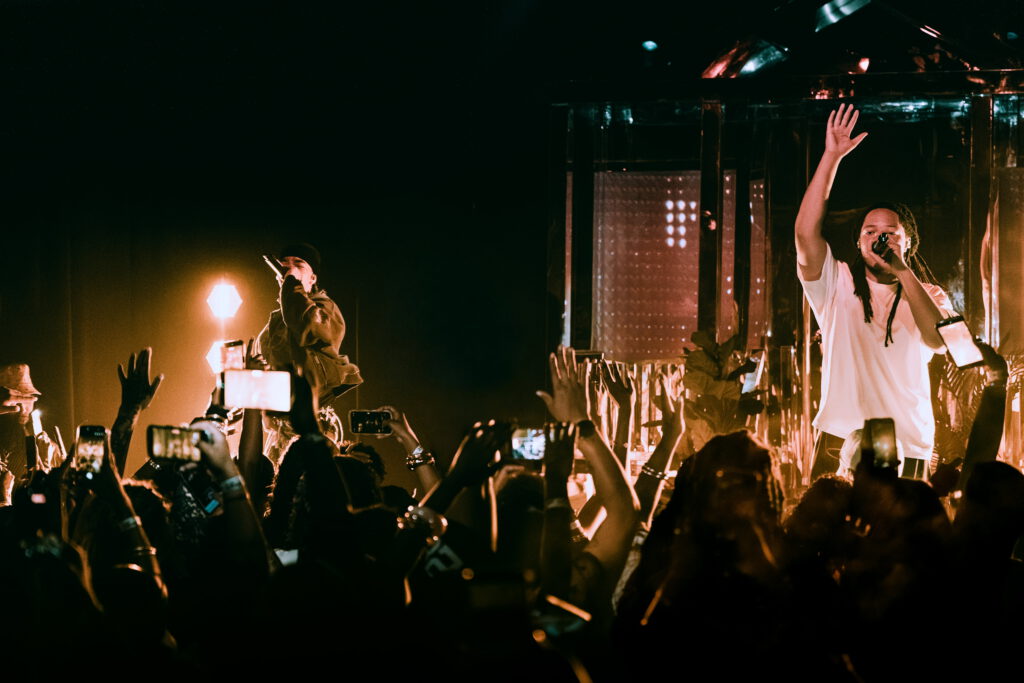
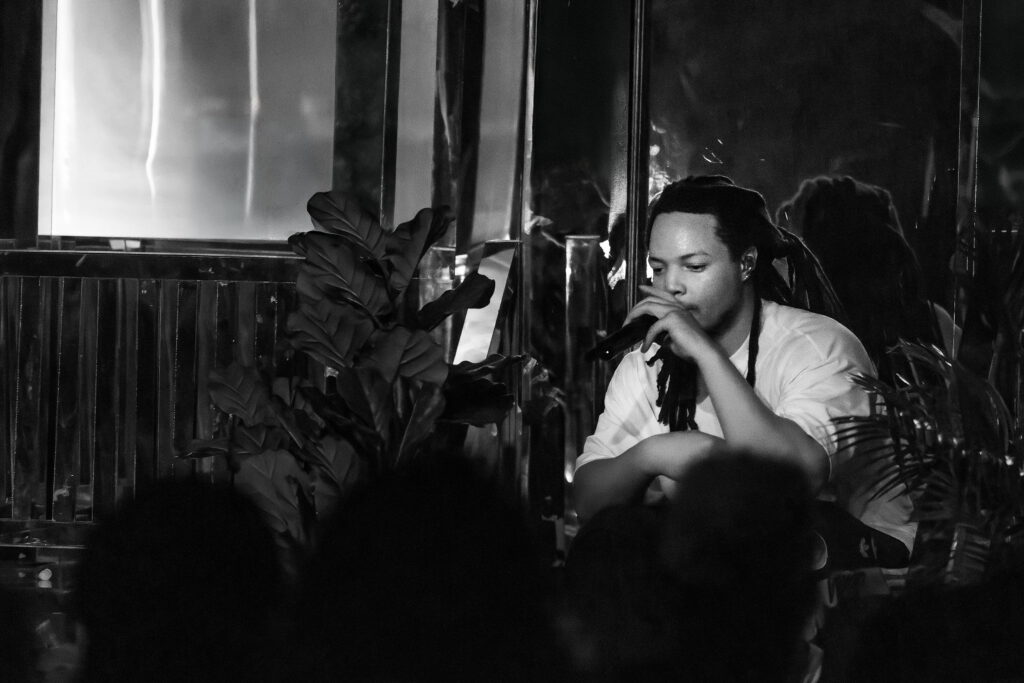
On a recent night at The Echo in Los Angeles, the atmosphere shifted from typical concert energy into something closer to a cultural statement. The crowd was a mix of dedicated listeners and curious onlookers, all gathered to witness an artist navigating one of the most complex dynamics in music: stepping into a major legacy while simultaneously rewriting it. Standing quietly in the back of that crowd was Clifford Joseph Harris Jr., better known to the world as T.I., watching his sons occupy the spotlight. It was a striking bit of passing-of-the-torch symbolism, showing a father stepping back to let the next generation fully claim the moment.
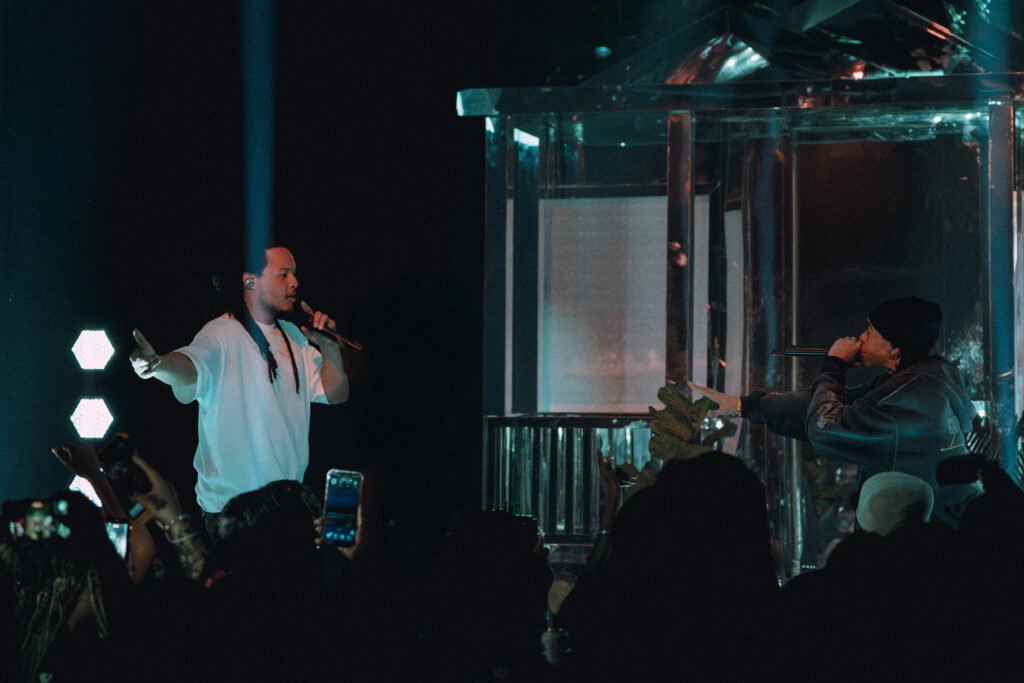
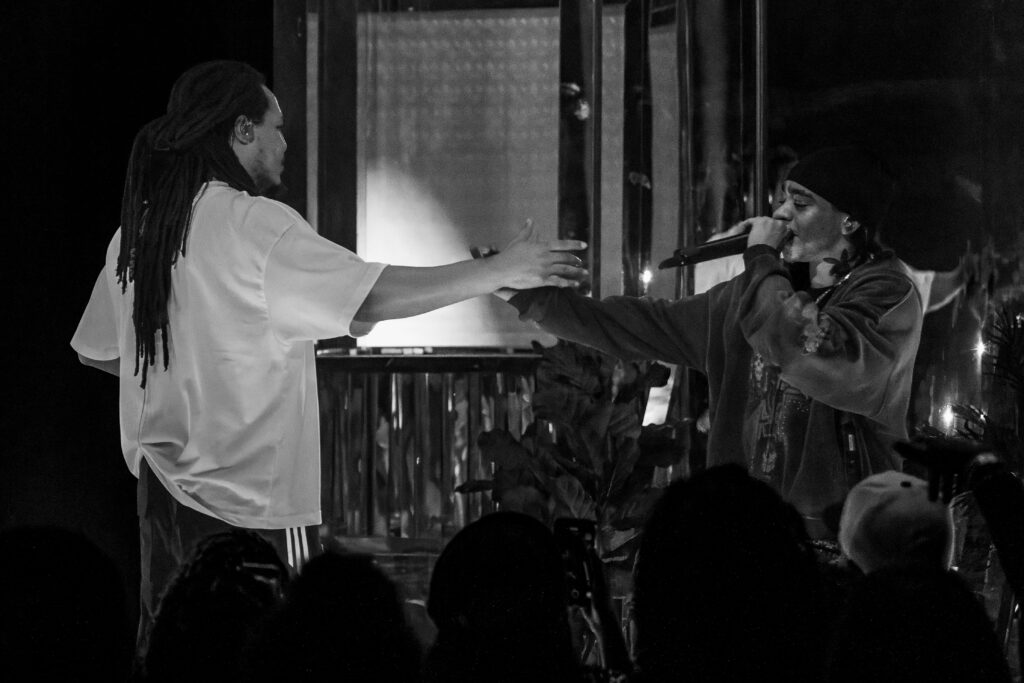
But Domani isn’t just letting the moment happen; he is intentionally constructing it, a mindset physically anchored on stage by a stark, transparent structure. While he navigates a lyric-first lane built on real depth that has rightfully earned him early comparisons to greats like J. Cole, he maintains a stylistic identity that is entirely his own. He is carving out a sonic direction that sounds completely different from his father, explicitly staging his evolution right before our eyes.
The Lost Art of Symbolism
In an era where lyricism can sometimes take a backseat to viral hooks, Domani stands out as one of the few young voices genuinely writing with raw honesty. Rather than just stringing clever lines together, his tracks feel like a deliberate window into his reality, a perspective that he actively brings to life through his stage design.
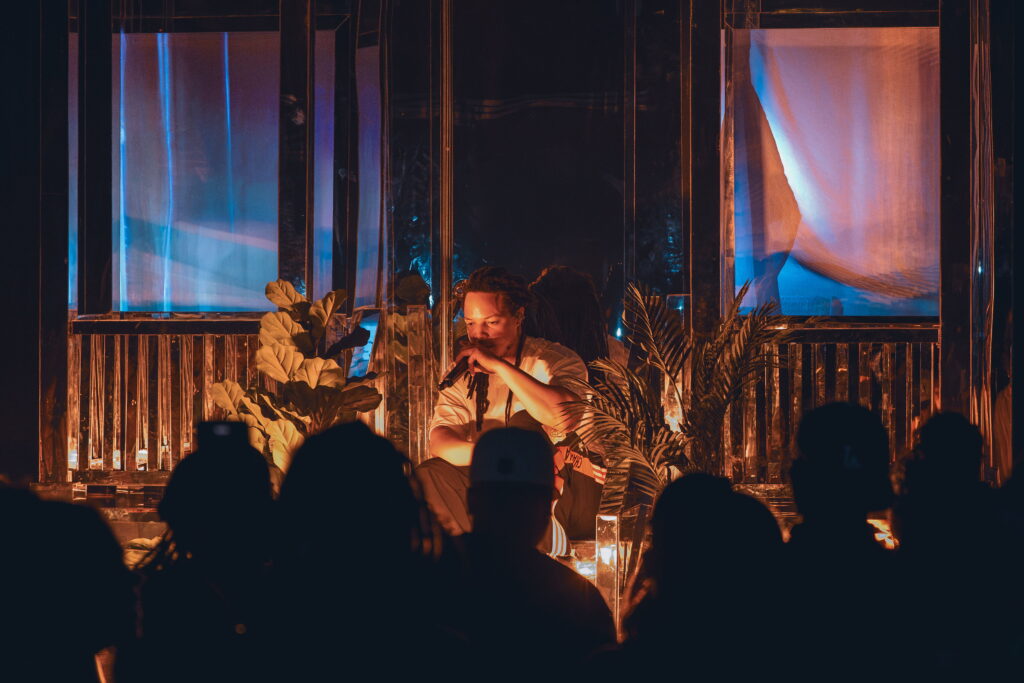
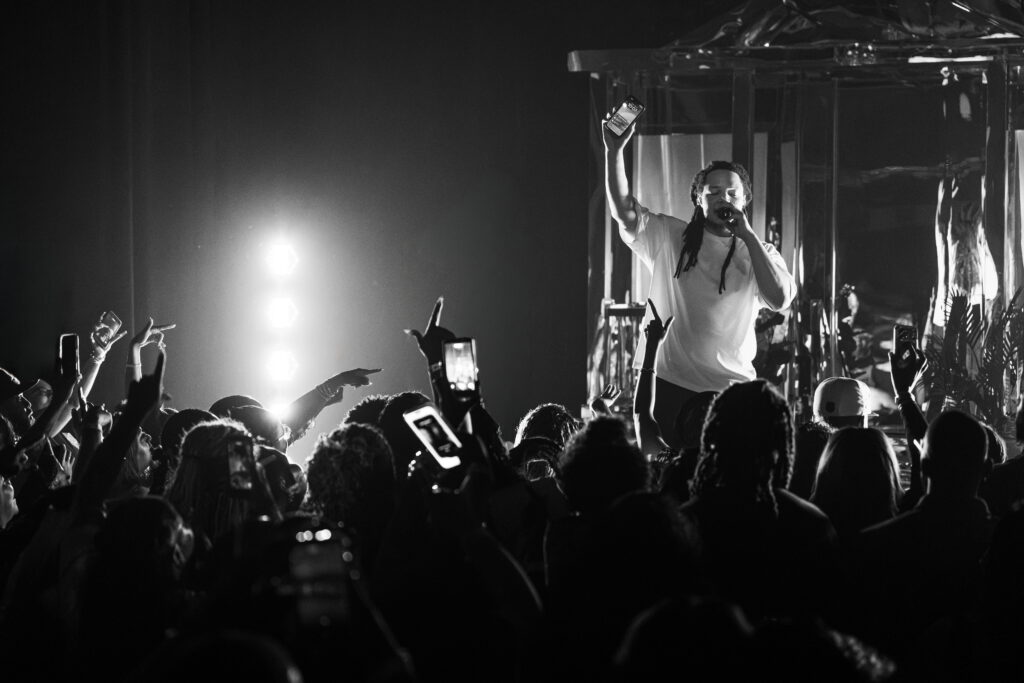
The centerpiece of his set, a transparent house that alternates between revealing and reflecting the artist inside based on the shifting light, carries immense weight. It is a visual representation of a life lived under constant public scrutiny. On his track “Telephone,” Domani wrestles with the heavy reality of a childhood spent on reality TV, where people have recognized his face since he was knee-high without ever knowing him for his own artistry. The lyrics reveal the exhaustion of a world that constantly demands access to him, where individuals bypass his identity entirely just to ask if he is kin to T.I.
The house serves as a metaphor for this fishbowl existence, but it also transforms into a sanctuary. When the noise of the world becomes too loud and success makes it hard to feel anything, the space becomes a private boundary where he disconnects from the chaos. It is where he strips away the public persona to speak directly to God about his real struggles, his guilt, and his questions about life.

Inside “Firebug”: Family, Fire, and Loyalty
This house is also deeply tied to his track “Firebug,” a moment in the show that highlighted a character trait worth cherishing: a profound sense of family love and loyalty. When the video screen behind the stage showed flames engulfing the inside of the house, the imagery carried a fierce emotional reality. On one level, it visually grounded the literal meaning of the song, which directly references the allegations against Curtis James Jackson III, known professionally as 50 Cent, burning down a home where his ex-partner and estranged son lived. On another level, those internal flames seemed to reflect the quiet fire within Domani himself, showing his willingness to fiercely protect his stepmother, Tameka “Tiny” Harris.
To see a young artist lean so heavily into narrative depth and familial defense early in his career is rare. The production never overpowered the music. Instead, it amplified the protective instinct embedded within the track. Seeing how deeply he understands narrative structure right now raises an exciting question. Where will his writing be as he gains more experience in the game, but more importantly, in life? If this is his baseline for storytelling, his maturity as a writer will undoubtedly secure him a respected, formidable place in the hip-hop world.
Cultivating the Room
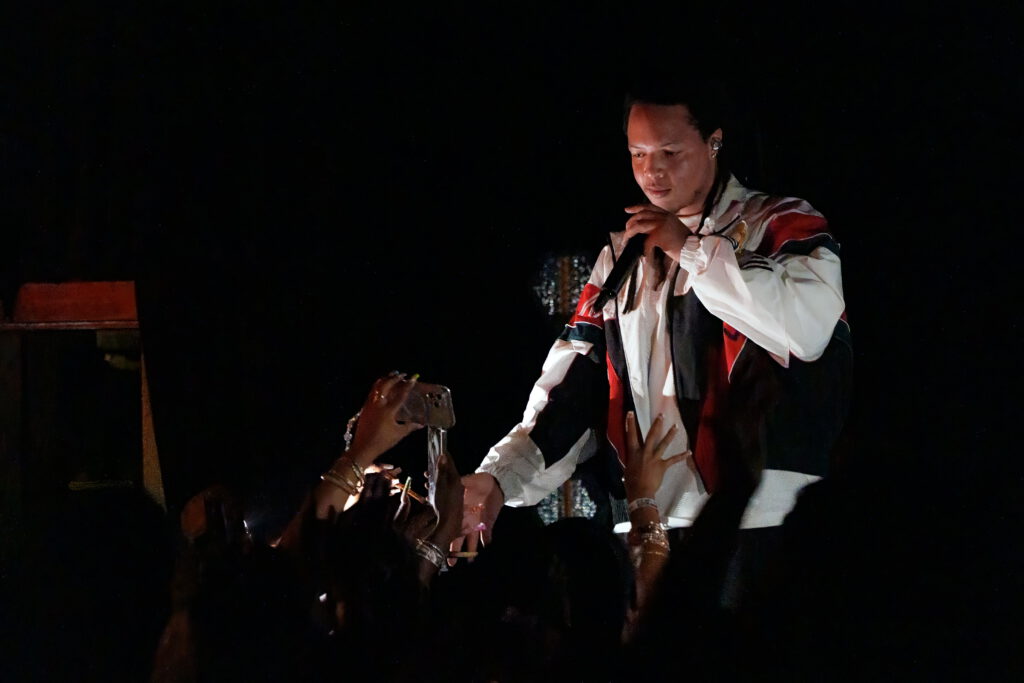
What makes an artist truly compelling is not just what happens under the stage lights, but the culture they cultivate in the room. Before Domani even stepped out, the anticipation inside the venue felt distinct. Standing in the crowd, I met an older woman whose face was lit up with genuine excitement. Every few minutes, she would glance back and forth between the stage and her husband, and she even turned to ask me whether Domani was ready to take the stage yet.
Her eagerness was not loud or dramatic. It was the quiet respect of a fan who recognized something rare. She noted that she simply loved his attitude and humility.
That sentiment echoed through the collective energy of the room. People were not just there for the music. They were drawn to the intelligence of his perspective and the grounded nature of his persona. The crowd’s intuition proved right during a massive high point in the set. When the notes of “ATL Never Scared” rang out, it left a room full of fans screaming the lyrics back to the stage, cementing the deep connection he had built with the audience throughout the night.



Beyond the Setlist
Long after the transparent house had been taken down and the house lights came up, Domani stayed behind. For nearly an hour, he met with every single person who waited. It was not a rushed, transactional meet-and-greet. He gave individual attention, shared genuine conversations, offered hugs, and signed merchandise. Among the items passed forward were his custom “Forever Lasting” candles; the lingering, woodsy notes of warm vanilla from the wax seemed to physically mirror the actual warmth left in the room. This level of accessibility did not feel like a post-show obligation. It felt like a completely natural extension of the humility people had been praising all evening, proving that the culture he is building on the floor is just as intentional as the music he plays on the stage.


A New Standard
The strongest statements in music are not always the loudest. Sometimes, they are simply the most honest. As hip-hop transitions into its next era, the artists who endure will be the ones who refuse to compromise on their artistic integrity and who treat their audience like a community. By prioritizing thoughtful songwriting, intentional artistry, and a deep sense of humility, Domani is defining exactly where he is going.

The strongest statements in music are not always the loudest. Sometimes, they are simply the most honest.